
Entangled
On Union, Light, and What Holds


I didn’t sleep much that night.
In the past, I would have called it anxiety.
A deep unsettledness. Thoughts racing. Something wrong that needed to be quieted or managed.
But lying awake in the dark, it didn’t feel like fear.
There was no tightness in my chest. No panic. No urgency to escape the moment.
It felt more like pressure — the kind that comes when something is asking for room.
Earlier that week, I had watched a short lecture. One of those videos you don’t expect to linger. A physicist explaining, almost casually, a strange idea from the early days of quantum theory: it is possible that there is only one electron in the universe.
Not metaphorically.
Not poetically.
Literally.
The claim was that what we experience as countless electrons — filling atoms, flowing through wires, holding matter together — might instead be the same electron, moving forward and backward through space and time. Appearing here, disappearing there. Not many things, but one thing seen at different moments along its journey.
I remember pausing the video and laughing quietly to myself.
That familiar, polite dismissal.
That’s interesting… but no.
And yet — days later — it wouldn’t let me go.
Lying there in the dark, the idea kept circling back, not as a problem to be solved but as a presence. One electron. One thing everywhere. Multiplicity as appearance. Separation as perception.
I stared at the ceiling and felt something shift. Not belief. Not disbelief.
Curiosity widening into something else.
At some point, I stopped trying to sleep and simply let the thought breathe.
What if separateness is not fundamental?
That was the question that finally pulled me fully awake.
Movement II — When Things Begin to Dissolve
Once the question took hold, it stopped behaving like a theory.
It didn’t demand agreement or disbelief. It simply lingered, quietly undoing some of the assumptions I didn’t realize I was standing on. The most basic one being this: that the world is made of things. Separate, self-contained objects moving through empty space.
Electrons. Atoms. Matter.
But the deeper I wandered into the language of modern physics, the more that assumption began to fray. Particles, I learned, are not really things at all — not in the way we instinctively imagine them. They have no hard edges. No fixed location. No certainty of being here rather than there.
What we call a particle is better described as a probability. A tendency. A region of likelihood. Less a dot and more a haze.
An electron, it turns out, is not a tiny bead orbiting a nucleus like a planet around a star. It is a cloud. A pattern. A set of possibilities that only collapse into something definite when they are observed — when they are forced to answer the question, Where are you?
And even then, the answer is provisional.
Beneath the particle is the field.
An invisible, everywhere-present field that fills space itself. The electron is not a thing moving through this field. It is something the field is doing in a particular place, for a particular moment. A ripple, not an object. An expression, not an entity.
Matter, in this telling, is not built from pieces.
It emerges from relationship.
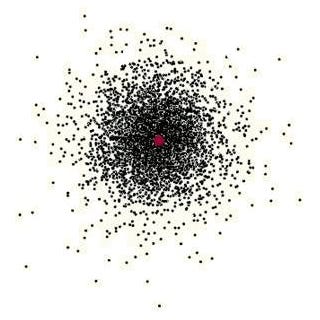
The language here is subtle, almost evasive. Physicists speak of excitations and fluctuations, of fields interacting with fields. But the implication is unmistakable: what appears solid and separate is anything but.
Even emptiness isn’t empty.
The space between atoms — the space I was taught to imagine as nothing — is alive with activity. Fields overlapping. Energies humming. Possibilities waiting. What looks like absence is saturated with presence.
It began to feel less like the universe is a collection of things, and more like it is a single, vast choreography — movements within movements, patterns held together by relationship rather than force.
Which made the idea of one electron feel less absurd.
If everything arises from a shared field, if identity is something that appears rather than something that stands alone, then perhaps multiplicity is not the starting point. Perhaps it is the surface.
And then there was the strange role of observation.
What unsettled me most was not that particles behave strangely.
It was when they behave strangely.
In the quantum world, observation is not passive. It is not simply noticing what is already there. To observe is to participate. To measure is to interfere. The very act of asking a particle where it is — or how fast it is moving — changes the answer you receive.
Before observation, the electron does not occupy a single location. It exists as a spread of possibilities, a wave of likelihood. Only when it is measured does it “choose” a position. And even then, it does so reluctantly, as if pressed into definiteness by the question itself.
The universe, it seems, does not like being pinned down.
This is often called the observer effect, though that phrase can be misleading. It isn’t that consciousness magically controls reality. It’s that interaction is unavoidable. To look is to touch. To know is to disturb.
Reality responds to relationship.
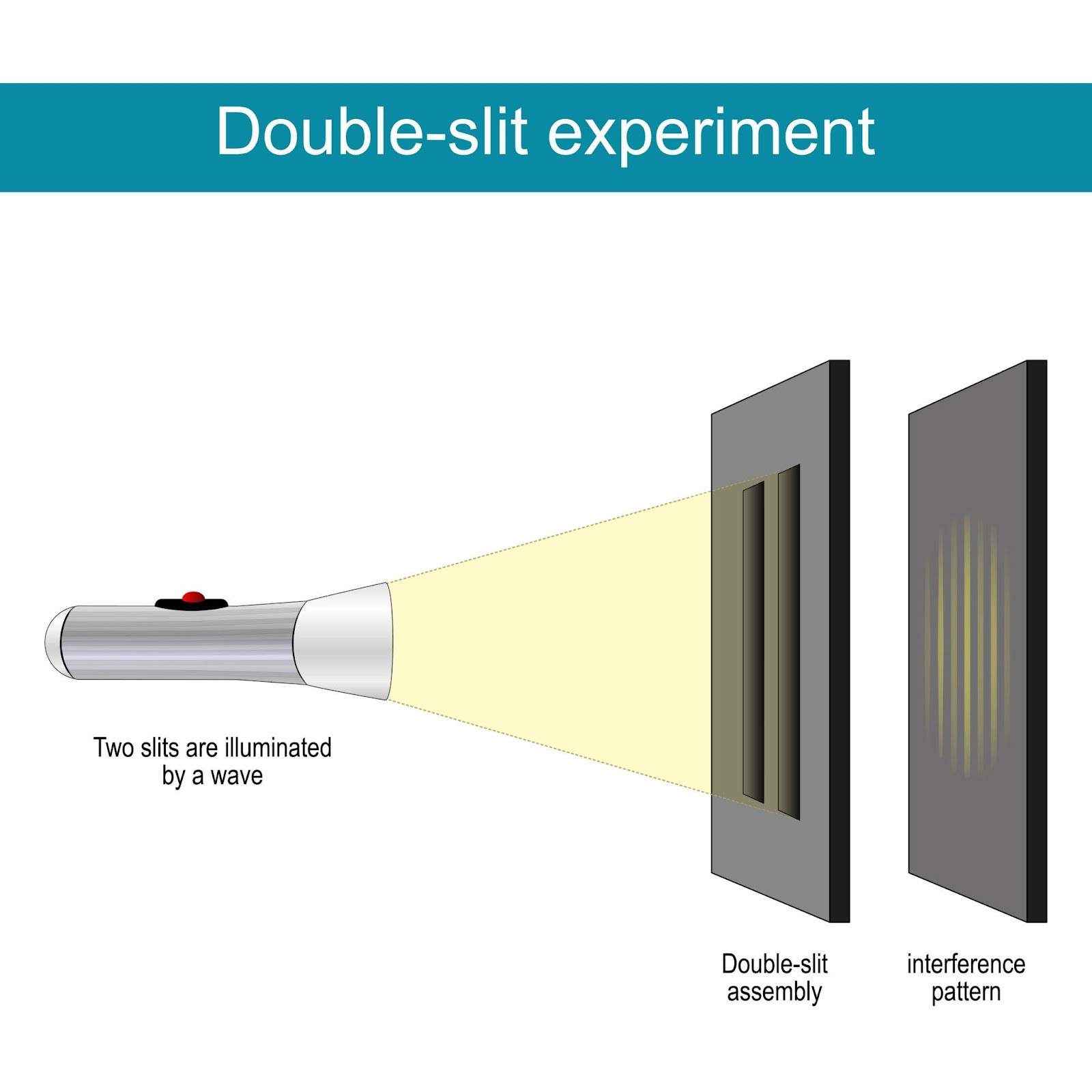
In the famous double-slit experiment, particles behave like waves — flowing through multiple paths at once — until someone tries to determine which path they took. The moment that information is sought, the wave collapses. The particle behaves like a particle again. As if the universe says: If you insist on certainty, I will give it to you — but only by becoming smaller.
It began to feel less like the world is hiding something, and more like it is protecting something. As though openness, ambiguity, and relationship are its native state — and definiteness is a concession made under pressure.
I couldn’t help but notice how familiar this felt.
How often, in our own lives, do we collapse complexity by demanding clarity too soon? How often do we force people, experiences, even ourselves into fixed categories — good or bad, right or wrong, healed or broken — simply because uncertainty makes us uneasy?
In quantum mechanics, insisting on precision costs you wholeness. You can know where a particle is, or how fast it is moving — but never both at once. The more tightly you grip one truth, the more the other slips away.
It made me wonder whether this isn’t just a feature of physics, but a pattern written into reality itself.
Movement III — When Distance Stops Meaning What We Think It Means
If particles dissolving into fields unsettled me, entanglement undid whatever certainty I had left.
Because entanglement doesn’t merely complicate our understanding of matter.
It dismantles our understanding of distance.
In the quantum world, two particles can become linked in such a way that they no longer behave as independent entities. Measure one, and the other responds instantly — regardless of how far apart they are. Across a room. Across a continent. Across the universe.
Not because information travels faster than light.
Not because something is being sent.
But because, at some deeper level, the two were never separate to begin with.
Physics is careful with its language here. It avoids words like connection or communication, because those imply two things reaching toward each other across space. Entanglement is stranger than that. It suggests that what we thought were two things are better understood as one system, temporarily appearing as many.
Distance, it turns out, may be a feature of perspective — not a fundamental property of reality.

This is where the language starts to tremble.
We are used to imagining the universe as a vast container, filled with objects scattered through space. Near and far. Here and there. But entanglement refuses that map. It behaves as though the universe is less like a container and more like a fabric — where pulling one thread subtly rearranges the whole.
Not influence at a distance.
Participation across what we call distance.
It’s difficult to overstate how disruptive this is.
Everything in our daily experience trains us to believe that separation is primary. That what happens here should not affect what happens there. That boundaries are real and absolute. Entanglement suggests otherwise. It hints that separateness may be something that emerges, not something that exists all the way down.
What we perceive as individuality could be the surface tension of a deeper unity.
And once that thought takes hold, it refuses to stay confined to physics.
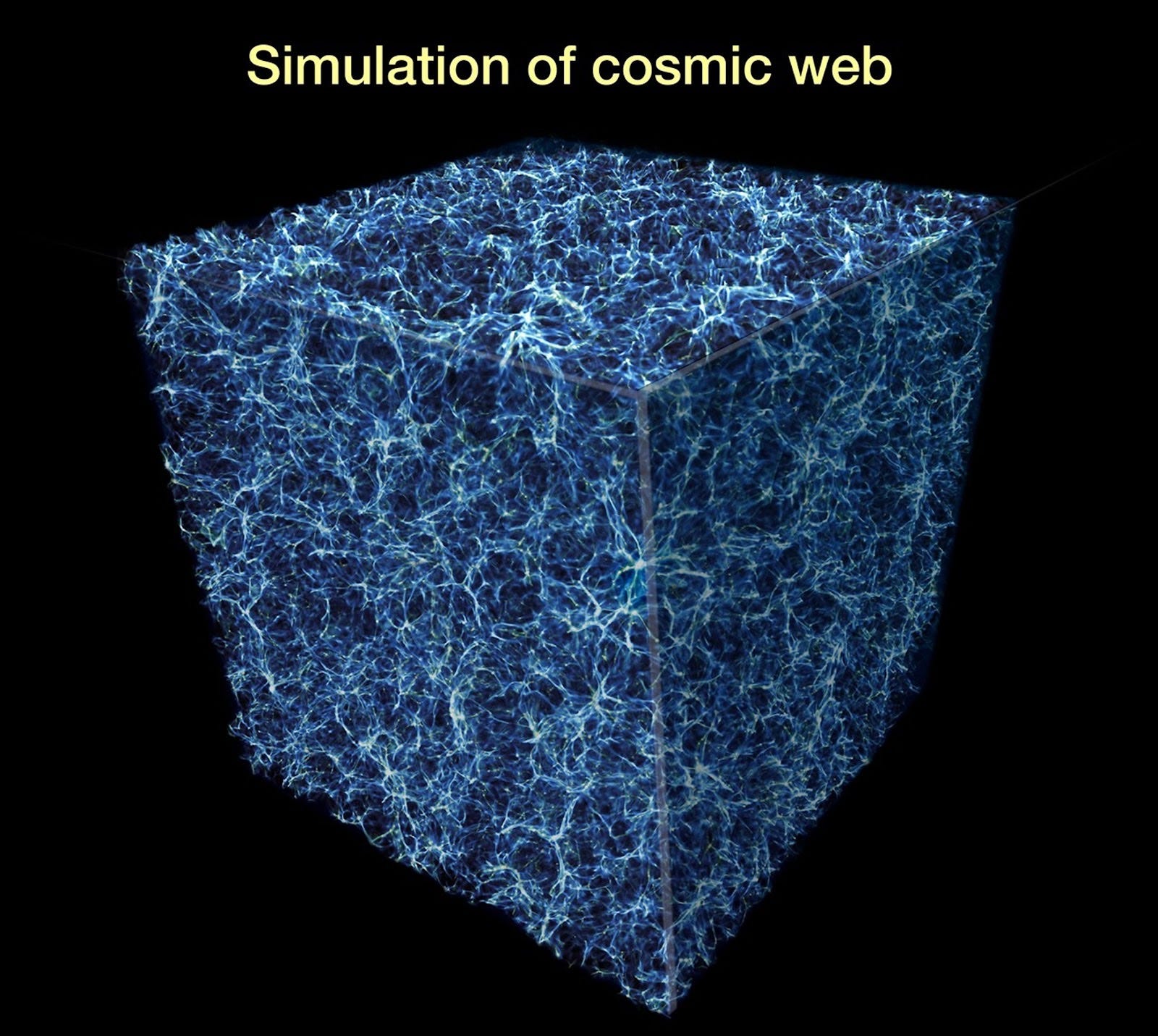
I began to notice how instinctively we defend distance in our own lives. Emotional distance. Moral distance. The careful ways we divide ourselves from one another in order to feel safe, clean, or correct.
We draw lines.
We name sides.
We reduce complexity to something manageable.
But entanglement suggests that this instinct — however understandable — may be built on a misunderstanding. That what we experience as isolation might be a collapse of perception rather than a description of reality.
In quantum systems, the moment you try to treat entangled particles as separate objects, the mathematics breaks down. The predictions fail. The equations stop working. You have to let go of the idea that they are independent in order to describe what is actually happening.
I couldn’t shake the feeling that this might be true elsewhere too.
That perhaps our moral, spiritual, and relational frameworks strain not because reality is broken — but because we keep insisting on separateness in a world that is not built that way.

Entanglement does not erase distinction.
The particles remain identifiable.
They are not absorbed into sameness.
But their identities only make sense in relation.
They are themselves — together.
Which felt like a clue. Not an answer, but a clue. A suggestion that unity and distinction are not opposites, but partners. That wholeness does not require uniformity. That relationship is not the enemy of identity, but its ground.
And somewhere in the quiet of that realization, the language of union — long dismissed as mystical or metaphorical — began to feel less like poetry and more like precision.
As though the universe had been saying the same thing all along, waiting for us to learn how to listen.
Movement IV — I Had Heard This Language Before
Long before I ever read about quantum fields or entanglement, I had been sitting with the language of Jesus.
For years, I returned again and again to the same stretch of text — the closing chapters of the Gospel of John, especially from chapter fifteen onward. These were not teachings delivered to crowds or arguments made in public. They were intimate. Dense. Almost circular. Jesus speaking as though reality itself were layered, relational, alive.
And for a long time, I didn’t know what to do with them.
The metaphors were familiar enough. A vine and its branches. Abiding. Indwelling. Words like in, with, through. But the logic underneath them felt foreign. Not moral. Not transactional. Not linear.
“Abide in me, as I abide in you.”
“Just as the branch cannot bear fruit by itself unless it abides in the vine…”
I understood these words devotionally.
I memorized them.
I preached them to myself.
But I didn’t understand how they could be true.
Because the world I had been taught to live in was built on separation. Individuals here. God there. Cause and effect. Obedience and outcome. The language of John felt like it belonged to a different map of reality altogether — one where participation mattered more than performance.
It wasn’t until much later, reading about quantum entanglement, that something quietly clicked.
Entangled particles do not relate the way objects relate. They are not connected across space. They are not influencing one another from a distance. Their identities are bound together in such a way that you cannot fully describe one without referencing the other.
They are distinct — and inseparable.
Which suddenly made the vine metaphor feel less like poetry and more like precision.

A branch does not strive to remain attached to the vine.
It does not maintain connection through effort.
Its life is participation.
Cut off, it does not become “bad.”
It simply withers — not as punishment, but as consequence.
Jesus’ language began to sound less like moral instruction and more like ontological description. Not what you should do, but how reality is structured.
This became even clearer in his prayer — the one I had skimmed past so many times without hearing how radical it was. The moment where Jesus speaks not to the disciples, but to the Father.
“That they may all be one. As you, Father, are in me and I am in you, may they also be in us.”
— Gospel of John 17
This is not metaphor layered on metaphor.
It is a claim about shared life.
Not unity of agreement.
Not similarity of belief.
But mutual indwelling.
The same kind of oneness Jesus claims with the Father, he extends outward — into humanity, into creation itself. Not later. Not eventually. But as something already present, waiting to be recognized.
For years, this language felt incomprehensible because I was reading it inside a world that could not accommodate it. A world where separation was assumed to be fundamental.
Quantum physics didn’t make these words true.
It made them legible.
It offered a grammar where unity does not erase distinction, and relationship does not threaten identity. A grammar where “in” and “with” are not sentimental words, but structural ones.
And I began to wonder whether Jesus wasn’t speaking metaphorically at all — but accurately — describing a reality we were never taught how to see.
Movement V — When Light Ends the Need for Pretending
For a long time, I had heard the word judgment and felt my body tense.
Judgment meant verdict.
Right and wrong.
Reward and punishment.
A reckoning waiting somewhere in the future.
But as the language of union began to settle, that definition no longer held.
In the Gospel of John, judgment is spoken of differently. Almost gently. Not as something imposed, but as something revealed.
“This is the judgment,” Jesus says, “that the light has come into the world.”
Not that the light condemned.
Not that the light punished.
Simply that the light arrived.
And with it, the end of hiding.
Judgment, in this telling, is not God deciding what to do with us.
It is reality becoming visible.
Light does not accuse darkness.
It exposes it.

I began to see how much of what we call judgment is really the fear of exposure. The fear that the stories we’ve told ourselves — about who we are, who others are, where the lines are drawn — will no longer hold once the light comes on.
Pretending requires darkness.
So does separation.
Fear thrives in dimness. It compresses the world into manageable categories: good and bad, right and wrong, safe and dangerous, victim and villain. Fear collapses dimensionality. It flattens complexity because complexity cannot be controlled.
And once fear takes hold, time collapses too.
The infinite depth of the present fractures into a linear track — past regret behind us, future threat ahead of us. We live forward anxiously and backward defensively, always bracing, always managing.
But Jesus never speaks from inside that collapse.
He speaks as though time itself is deeper than sequence. As though eternity is not endless duration, but unfractured presence.
“Whoever hears my word and believes has eternal life.”
Not will have.
Has.
Which only makes sense if eternal life is not something you wait for, but something you enter — the moment fear loosens its grip.

Seen this way, judgment is not the end of us.
It is the end of pretending.
The end of the stories that require separation to survive.
The end of identities built entirely around wounds.
The end of fear’s need to keep everything small.
Nothing is deleted.
Nothing is erased.
Even in physics, information is conserved. What happens is not lost — it is carried forward, transformed, integrated. Wounds do not disappear. They are re-contextualized.
This is where resurrection finally made sense to me.
Not as reversal.
Not as denial of death.
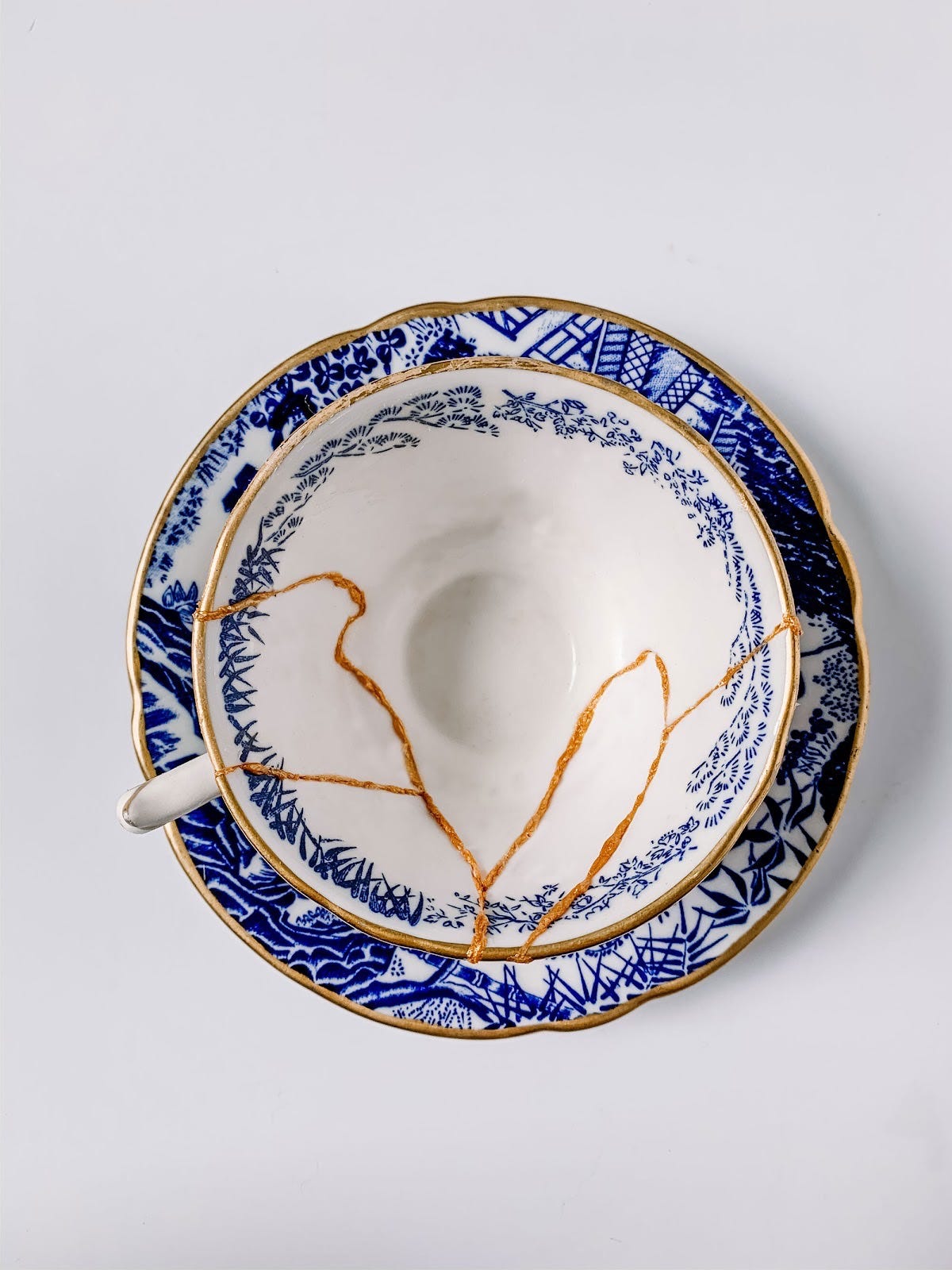
But as re-knitting.
Jesus rises still bearing scars — not as accusations, but as testimony. History held, not undone. Pain remembered, but no longer ruling.
Resurrection is what happens when light reaches everything without destroying anything.
There was a moment years earlier when I had encountered a sentence that I didn’t yet have language for — but it had lodged itself somewhere deep and refused to leave.
It came from Brennan Manning, in The Furious Longing of God.
He wrote that in the Kingdom of God, there are only two forms of judgment.
You can judge someone as worthy of love,
or as unworthy of love.
Those are our options.
Nothing about reward or punishment.
Nothing about moral scoring.
Nothing about distance.
Just this single, devastating question: Is this person still worthy of love?
Seen in the light of everything else, that sentence landed differently now. It no longer sounded sentimental or naïve. It sounded precise. Structural. As though it were naming the only judgment that can exist in a reality where separation is not fundamental.
Because to judge someone as unworthy of love is to insist on separation.
And to judge someone as worthy of love is to remain inside union — even when it costs.
Light does not ask us to decide who deserves it.
It only asks whether we will let it reach everything.
And suddenly, judgment no longer felt like a threat.
It felt like a mirror.
Not exposing whether we were good enough —
but revealing whether we were willing to stay connected.
To live as though union were not an aspiration, but the ground of being.
To abide where separation no longer makes sense.
To let light do what light does.
To stop pretending.
Movement VI — Union as the Ground Beneath Everything
At some point, the need to explain began to fade.
Not because the questions were answered, but because they had changed shape. They no longer felt like problems to be solved. They felt like invitations — ways of standing inside the world differently.
Union, I realized, was never the destination.
It was the ground.
The mistake wasn’t that we had failed to achieve it.
The mistake was that we had learned to live as though it were absent.
Fear taught us to believe that separation was fundamental — that we were isolated selves navigating an indifferent universe, that distance defined reality, that love was an exception rather than the rule. Everything from there became effort. Performance. Management.
But if union is true — if relationship is woven into the structure of reality itself — then so much of what exhausts us begins to loosen its grip.
We don’t have to manufacture meaning.
We don’t have to secure belonging.
We don’t have to prove worth.
We are already held.

Even worship begins to look different.
Not an attempt to reach God somewhere else.
Not words spoken upward in hope of response.
But attention.
Alignment.
Refusal of the lie of separation.
Worship becomes agreement with what is already true.
This is what makes the call to abide feel so gentle, and so demanding, at the same time. Not because it asks us to strive, but because it asks us to stop leaving.
To remain.
To stay.
To live as though connection were more real than fear.

Nothing about this erases suffering.
Union does not deny wounds.
It holds them.
Union does not flatten difference.
It gives it context.
Union does not rush healing.
It makes space for integration.
Resurrection, then, is not an interruption of reality, but its fulfillment. Not an escape from the world, but the world finally remembered — nothing lost, nothing wasted, everything gathered.
The culmination of all things is not separation resolved by force.
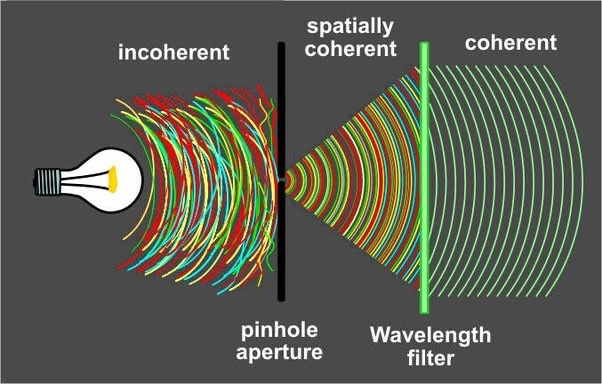
It is coherence restored by love.
I don’t know what language we will use in the future to speak about these things. Science will keep refining its models. Theology will keep shedding what no longer serves. Poetry will keep circling what cannot be said directly.
But I’m no longer afraid of the mystery.
If the universe is relational at its core, then curiosity is not a threat to faith. It is fidelity to it. Discovery is not departure. It is remembrance.
And perhaps the deepest truth is also the simplest one.
We were never as separate as we thought.
We never have been.
And learning to live as though that were true —
that may be the work of a lifetime.
Author’s Note
For much of human history, we have tried to name reality by standing outside it.
We described God as distant.
Truth as abstract.
Meaning as something we had to earn, discover, or appease.
Life, in all its human messiness — love, suffering, longing, fear — felt like a puzzle we were never given the key to. We sensed that something was holding everything together, but we could not read the language it was written in.
Until, Christians believe, God stopped speaking about reality and began speaking from within it.
Jesus does not arrive as a new idea or a better explanation. He arrives as translation.
When he says, “If you have seen me, you have seen the Father,” he is not offering a theological claim so much as a revelatory one. He is saying: This is what reality looks like when nothing is separated.
Human life — embodied, relational, wounded, compassionate — becomes the Rosetta Stone. What was once incomprehensible is suddenly legible. Love is no longer an abstraction. Union is no longer a metaphor. God is no longer elsewhere.
The mystery does not disappear.
But it becomes intelligible.
This piece is not an attempt to prove anything — scientifically or theologically. It is an act of recognition. A tracing of echoes between disciplines that are finally learning how to hear one another again.
If there is truth here, it will not be found in certainty, but in coherence. In the quiet sense that the world, when seen clearly, is more relational, more generous, and more whole than we were taught to believe.
And if Jesus is the key, it is not because he explains everything —
but because, in him, everything finally makes sense together.
For Further Investigation
(paths of curiosity, not prescriptions)
This piece does not arrive at conclusions so much as it traces recognitions. For those who feel stirred rather than satisfied, the following works offer ways to continue the exploration — across physics, theology, philosophy, and lived experience.
These voices do not all agree with one another. Some challenge assumptions. Some resist synthesis. That tension is not a flaw. It is part of the work.
Read. Listen. Wander slowly.
Quantum Physics, Fields, and Entanglement
These works explore a reality where objects dissolve into fields, and separateness becomes increasingly difficult to defend.
Helgoland – Carlo Rovelli
A profound and accessible meditation on quantum mechanics and relational reality.The Order of Time – Carlo Rovelli
On time as emergent, relational, and far stranger than sequence.Quantum Enigma – Bruce Rosenblum & Fred Kuttner
Especially valuable on observation, measurement, and the strange role of the observer.The Dancing Universe – Marcelo Gleiser
A poetic exploration of modern physics and humanity’s longing for coherence.Richard Feynman — Lectures & Essays
Particularly his reflections on particles, antiparticles, and the limits of explanation.
Time, Perception, and Relational Reality
For those drawn to how fear collapses time — and presence restores depth.
Time Reborn – Lee Smolin
A physicist wrestling honestly with time, causality, and meaning.A Brief History of Time – Stephen Hawking
A classic introduction to time, cosmology, and mystery.
Scripture as Ontological Language
These texts are best read slowly — not as instruction manuals, but as descriptions of reality.
Gospel of John (especially chapters 13–17)
The vine and branches discourse, the language of abiding, and the prayer of union.Colossians 1
“In him all things hold together.”Acts 17:28
“In him we live and move and have our being.”
Jesus as Revelation, Not Abstraction
These authors approach Christ not primarily as solution, but as translation — the Rosetta Stone of reality.
The Furious Longing of God – Brennan Manning
Especially his reframing of judgment as the decision to remain in love.Abba’s Child – Brennan Manning
On identity, worth, and belonging beyond performance.Jesus the Christ – Thomas Merton
Christ as the meeting place of God and humanity, not the exception to it.
Mystics and the Language of Union
These voices did not wait for modern physics to articulate what they already knew experientially.
Meister Eckhart
Julian of Norwich
Teresa of Ávila
John of the Cross
Read them not for certainty, but for resonance.
Lectures & Conversations (YouTube)
(listening as exploration)
These talks are included not because they arrive at the same conclusions, but because they ask honest questions about reality, time, consciousness, and connection.
Rupert Sheldrake
Suggested searches:
“Rupert Sheldrake The Science Delusion”
“Rupert Sheldrake consciousness and nature”
Valuable for interrogating assumptions around separation, memory, and participation.Neil deGrasse Tyson
Suggested searches:
“Neil deGrasse Tyson quantum mechanics”
“Neil deGrasse Tyson on not knowing”
Especially helpful where humility before mystery is modeled.Brian Greene
Suggested searches:
“Brian Greene quantum entanglement explained”
“Brian Greene fabric of the cosmos”Carlo Rovelli
Suggested searches:
“Carlo Rovelli on the nature of time”
“Carlo Rovelli relational quantum mechanics”Donald Hoffman
Suggested searches:
“Donald Hoffman reality is not what we see”
“Donald Hoffman consciousness and spacetime”Richard Rohr
Suggested searches:
“Richard Rohr nondual Christianity”
“Richard Rohr Christ as pattern”Brennan Manning (archival talks)
Suggested searches:
“Brennan Manning judgment love”
“Brennan Manning Abba’s Child lecture”Lex Fridman
Suggested searches:
“Lex Fridman Carlo Rovelli”
“Lex Fridman consciousness physics”
A Final Orientation
Move slowly.
Read for recognition, not ammunition.
Notice what widens you — and what collapses you.
Union does not require agreement.
It invites participation.
The door remains open.
By Kevin David Kridner
Written in attentiveness and wonder.
© 2026 Kevin David Kridner. All rights reserved.
This was an incredible read. It’s fascinating to see God’s fingerprints and intentional design throughout science.